by Mordy Shinefield | Sep 24, 2026 | Blog, Data Center Decommissioning
TL;DR
- North American data center vacancy was 1% at year-end 2025, the second consecutive year at that level, and 92% of capacity under construction was already precommitted (JLL, 2026). The site and the equipment are separate assets with different markets and different value drivers.
- Many existing data centers were designed for 5 to 15 kW per rack and are insufficient for the 40-kW-plus densities AI workloads require (CBRE, 2026). A twenty-year-old buildout can be an obstacle rather than an asset.
- 82% of operators report having no racks above 30 kW (Uptime Institute, 2025), suggesting that inherited infrastructure rarely meets high-density demand.
- Large power transformer lead times are commonly quoted at 36 months, with some reaching 60 months (DOE, 2024). Grid-connected power capacity is worth protecting.
- Recoverable equipment carries data center asset recovery value that can offset removal costs. For its AES Blue Cross project, Quantum Technology purchased the generators, switchgear, UPS systems, and AC systems and applied the revenue to the client’s decommissioning cost.
The Strategic Value of Vacant Data Center Repositioning
Data center decommissioning is the process of safely disconnecting, removing, and disposing of the electrical and mechanical equipment inside a facility so the building itself can be repurposed, redeveloped, or re-leased. For owners of an idle facility, that distinction matters more than it first appears.
The land, power access, fiber, zoning, and reinforced construction that make a former data center hard to replicate are separate assets from the aging generators, UPS systems, and chillers installed inside. In a market where North American vacancy sat at 1% at year-end 2025 (JLL, 2026), preserving the site and preserving the equipment are two different decisions, and treating them as one can cost you money.
This is a guide to vacant data center repositioning that helps owners separate what is genuinely scarce from what is simply old. It is also a guide to getting value from what you remove: recoverable generators, UPS systems, chillers, switchgear, and cabling can be reconditioned and resold in a live secondary market rather than sent to a landfill, and that recovery revenue can offset a meaningful share of the removal cost.
Why Is the Site Scarce Even When the Equipment Isn’t?
The site is scarce because power availability and infrastructure delivery timelines have become the constraint, not the shortage of buildings. Power availability and infrastructure delivery timelines were the most decisive factors shaping site selection, leasing activity, and pricing across major U.S. markets in the first half of 2025 (CBRE, 2025a). When power is the bottleneck, a facility that already has utility power, an approved use history, fiber, and equipment yards has attributes that a new developer cannot quickly replicate.
The numbers back this up:
- Under-Construction Capacity: More than 35 GW of capacity was under construction across North America at year-end 2025, with 92% already committed through binding leases or owner-occupied development (JLL, 2026).
- Preleasing Activity: Preleasing reached 74.3% of under-construction capacity across major markets (CBRE, 2025a).
- Northern Virginia Vacancy: In the largest U.S. market, vacancy sat at 0.5% in 2025 and dropped to an unprecedented 0.3% in Q1 2026 (CBRE, 2025b; CBRE, 2026).
Here’s the part worth sitting with: none of that scarcity is about installed generators, UPS modules, or chillers. It’s about location, power, connectivity, and permitting. Those are real estate and utility attributes. The equipment inside is a separate question with a separate answer.
Why Do Old Buildouts Mismatch New Demand?
Old buildouts no longer meet new demand because rack densities and cooling strategies have evolved faster than most existing infrastructure can keep up. Many existing data centers were designed for 5 to 15 kW per rack and are insufficient for the 40-kW-plus densities AI workloads require (CBRE, 2026). For operators with substantially different density or cooling requirements, portions of an older buildout may need to be replaced or redesigned.
The operator data reinforces the gap (Uptime Institute, 2025):
- Average Rack Densities: The most common modal average rack density is 4 to 5 kW (reported by 30% of operators), with only 4% operating at 20 to 29 kW and 2% exceeding 50 kW.
- High-Density Capacity: At the high end, 82% of operators report having no racks above 30 kW, 17% operate some racks in the 30-49 kW range, and 9% report racks at 50 kW or more, while cabinets exceeding 100 kW remain rare.
When an incoming tenant needs to build for high density, an inherited low-density MEP layout may have limited value to a high-density operator and should be evaluated against the requirements of the likely next user.
Cooling has shifted too:
- The Shift to Liquid: Liquid cooling is becoming essential for high-density racks. A hybrid approach is typically 70% liquid and 30% air, and in new construction, liquid-cooling infrastructure has quickly become the default installation (JLL, 2025).
- Thresholds for Adoption: Most operators believe direct liquid cooling becomes necessary in the 20-39 kW range, with 29% citing 20-29 kW (Uptime Institute, 2024).
- The Weight of Immersion: There is a structural wrinkle, too. The largest immersion cooling baths can weigh up to 4 metric tons, and immersion is used in fewer than 10% of data centers today (JLL, 2025).
A cooling plant designed for low-density air is not what a liquid-first operator wants to inherit.
Powered Shell vs. Turnkey: What Actually Transfers to a Buyer?
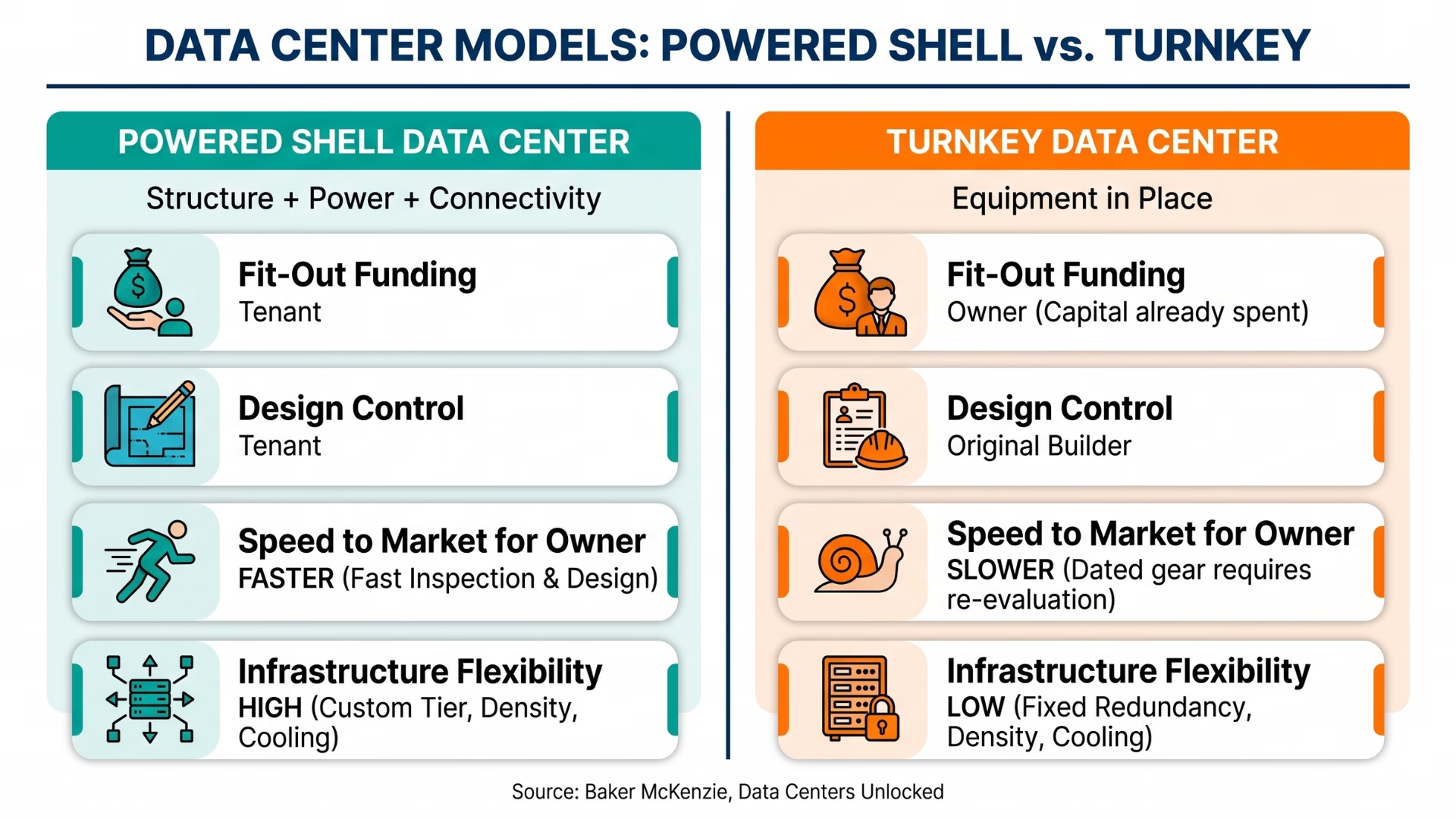
A powered shell data center is a facility delivered with the physical structure, site power, and connectivity infrastructure in place, while the interior fit-out is left to the tenant. It is a useful framework for owners because it separates durable, hard-to-replicate assets from disposable ones. Core-and-shell and turnkey are distinct delivery models (Baker McKenzie, 2025), representing the fork in the road owners face when a facility goes idle. In practical terms, this fork is where the decision to reposition vacant data centers is made: everything upstream is analysis, and everything downstream is execution.
This matters because modern operators typically want to design their own infrastructure around specific redundancy tiers, manufacturers, emissions standards, power densities, and cooling strategies. For example, the Tier standard (Uptime Institute, n.d.) defines specific operational baselines:
- Tier III: Concurrently maintainable with redundant components and distribution paths.
- Tier IV: Adds fault tolerance through independent, physically isolated systems.
Achieving these specific outcomes requires strict control of Tier-relevant components, including engine generators, energy storage, chillers, cooling units, UPS modules, pumps, heat-rejection equipment, and fuel tanks. A tenant chasing a specific Tier outcome will often reject inherited MEP rather than validate someone else’s twenty-year-old choices against their design.
Comparison: Powered Shell vs. Turnkey Data Center Models
| Data Center Delivery Model |
Fit-Out Funding |
Design Control |
Speed to Market for Owner |
Tenant Infrastructure Flexibility |
| Turnkey Data Center (Equipment in Place) |
Owner (capital already spent) |
Original Builder |
Slower (if dated gear requires re-evaluation) |
Low (Tenant inherits fixed redundancy, density, and cooling) |
| Powered Shell Data Center (Structure + Power + Connectivity) |
Tenant |
Tenant |
Faster (Clean space is easy to inspect and design around) |
High (Tenant builds to custom Tier, density, and cooling) |
Source for the model definitions: Baker McKenzie, Data Centers Unlocked.
Does Upgrading Aging Infrastructure Actually Attract a Buyer?
Whether to upgrade or sell as-is depends on whether current operators actually want the installed gear, and the density data suggests many won’t. If an incoming operator is building for high-density or AI workloads that require the 40-kW-plus-per-rack density, spending money to modernize a legacy buildout can be throwing good money after bad. The buyer will still redesign around their own tier, manufacturers, and cooling approach.
For some owners, a cleaner path may be to deliver a powered shell data center. That preserves the scarce assets, the structure, utility power, and connectivity, while removing the outdated interior a buyer would strip anyway. A clean shell is also easier to inspect, design, finance, and redevelop, which can widen the pool of prospective buyers rather than narrowing it to the few who happen to want a specific inherited infrastructure.
Is It More Profitable to Sell the Data Center Turnkey or Sell the Real Estate and Hardware Separately?
It can be more profitable to separate the two because the real estate, power capacity, and equipment are distinct markets with distinct buyers. The building’s scarcity is tied to power and location, both of which are in high demand. The hardware, by contrast, has its own resale channel.
Recoverable generators, UPS systems, chillers, cooling equipment, racks, and cabling carry data center asset recovery value. Our used-equipment marketplace lists a Used Generators collection with 174 products and prices used switchgear directly, such as a Square D QED-2 switchboard listing. Pricing and inventory change over time, so any figure should be treated as a snapshot. The point stands: when a live resale market exists for the hardware, selling turnkey to a buyer who plans to remove it anyway may leave that recovery value on the table.
Should I Sell My Data Center, Lease It, or Dismantle It to Reuse the Space?
The right choice depends on the balance between the demand for your site’s power and location and the demand of the equipment installed there. With North American vacancy at 1% and 92% of construction precommitted (JLL, 2025), the site and its grid-connected power capacity are usually the durable value, which argues for keeping the property rather than walking away.
The equipment is the part worth reassessing. Where the installed equipment does not match likely tenant requirements, dismantling to a clean powered shell can preserve the underlying value of the site while recovering value from the equipment, leaving a space that is easier to inspect, finance, and redevelop. Leasing as-is tends to make sense only when a tenant genuinely wants the existing infrastructure.
What Does Data Center Equipment Removal Actually Involve?
Data center equipment removal involves safely disconnecting and dismantling the facility’s electrical and mechanical systems, then routing each item for reuse, resale, or recycling.
Quantum Technology’s data center decommissioning scope covers the safe disconnection and removal of critical infrastructure, including:
- Power Systems: Gas and diesel generators (with fuel tanks and support equipment), UPS systems (with batteries), switchgear, and electrical distribution.
- Mechanical & Cooling: Cooling towers, chillers, pumps, and HVAC infrastructure.
- Facility Cabling & Racks: Server racks, overhead cable trays, and copper/fiber cabling.
The routing decision is where environmental sustainability and financial recovery meet:
- Secondary Market Resale: Equipment with remaining service life is reconditioned and resold, capturing data center asset recovery value to offset labor costs.
- Material Recycling: Materials that cannot be reused are processed through certified recycling channels.
- Responsible Disposal: Only non-recoverable, non-recyclable remnants are routed to final disposal.
Every generator or switchgear lineup returned to service avoids the environmental cost of manufacturing new equipment while preserving capital for the site owner.
It isn’t only logistics; dismantling a site involves critical compliance and safety touchpoints. This requires safely de-energizing systems using proper safe-off and lockout/tagout procedures (OSHA, n.d.). It also means managing UPS batteries under universal waste rules and adhering to local and federal environmental requirements regarding fuel handling, refrigerants, and stationary backup generators. These regulations vary by jurisdiction, requiring a knowledgeable partner to ensure the project stays compliant.
An 8-Step Vacant Data Center Repositioning Diagnostic
Use this checklist to decide what stays, what goes, and how a powered shell data center might serve an owner better than a turnkey sale. It sequences the data center equipment removal decision from market analysis through final disposition.
- What is the true market demand for the site? Assess how scarce your specific location and grid-connected power truly are.
- Does the facility match modern density needs? Compare your current per-rack design to the requirements of high-density AI workloads.
- What equipment would a new operator actually keep? Evaluate whether your existing infrastructure aligns with a buyer’s expected redundancy Tiers.
- What are the cooling requirements? Determine whether an incoming tenant will require direct liquid cooling rather than your existing air-cooled plant.
- What can be recovered and resold? Identify which generators, UPS systems, and chillers have secondary market value.
- What does removal actually cost? Outline the logistics, safety protocols, and compliance requirements for a safe disconnect.
- What is the net recovery value? Calculate how much of the decommissioning labor can be offset by selling the recovered equipment.
- What must remain with the building? Clearly separate the disposable interior assets from the durable real estate, power, and fiber that define a powered shell.
Why Does Time Work Against Idle Equipment?
Time works against idle equipment because its resale value can erode while the building sits vacant, even as the underlying power capacity retains its value. Grid-connected power is a durable asset in a constrained market. Large power transformer lead times are commonly quoted at 36 months and can reach 60 months, making the limited availability of spare large power transformers a resilience concern (DOE, 2024). That is a reason to protect a site’s power capacity, not to leave equipment aging in place, hoping it appreciates.
Older gear can still sell, which is a reason to act sooner rather than later. On the Bank One project, Quantum Technology sold four Cummins generators dating from 1979, along with the switchgear, generators, and chillers it dismantled on site. Idle equipment continues to age, and its resale value can decline as models become obsolete or buyer demand changes. A live resale channel and a clear removal plan usually beat indefinite storage.
Case Studies in Asset Recovery
Quantum Technology has run this play on its own projects. Both of the following examples show the same pattern: separating equipment value from real estate value can offset the cost of clearing a facility for its next use, whether that use is a powered shell listing or a completely redeveloped site.
- AES Blue Cross: Quantum Technology purchased the generators, switchgear, UPS systems, and AC systems outright, applying that equipment revenue directly toward the client’s decommissioning costs.
- Bank One: Quantum Technology dismantled and removed the switchgear, generators, and chillers, and safely disconnected the UPS systems and transformers to clear the facility.
Because Quantum Technology both removes the equipment and resells it through its own equipment division, the data center asset recovery value remains within a single engagement rather than being split between a demolition contractor and a broker. You can explore more examples of this recovery process in our full library of data center decommissioning case studies.
Working With Quantum Technology
Quantum Technology decommissions and dismantles data centers and purchases the equipment removed from them. But our true differentiator is that we understand both sides of the equation: we know what infrastructure has value left in place, and what has greater value when removed, reconditioned, and resold. Because our team handles both the safe removal and the resale channel, the recovered value is credited directly against your project cost.
If you are holding a vacant facility and trying to decide what to keep, the best place to start is a walkthrough and an equipment inventory. See our data center decommissioning services, or browse our used equipment marketplace to see what assets like yours are selling for today.
FAQ
1. What is vacant data center repositioning?
Vacant data center repositioning is the process of deciding what an idle facility should become next and which of its assets should carry forward into that use. It treats the site, meaning land, utility power, fiber, zoning, and structure, as separate from the installed electrical and mechanical equipment, then makes a distinct call on each. Repositioning separates these elements because a site’s value is heavily driven by power and location, while the installed equipment may or may not align with an incoming tenant’s specific density requirements. Repositioning is the work of correctly evaluating and pricing that difference.
2. Should I upgrade aging infrastructure to attract a buyer, or sell the data center as-is?
It depends on whether the buyers you’re targeting actually want the installed gear. An operator building for high-density AI workloads will often redesign around their own Tier, manufacturers, and cooling approach. Instead of upgrading, some owners find it more effective to deliver a clean, powered shell that preserves the structure, utility power, and connectivity. This can make the space easier to inspect, design, finance, and redevelop, widening the buyer pool.
3. Should I sell my data center, lease it, or dismantle it to reuse the space?
The right choice depends on the demand for your site’s power and location versus the demand for its installed equipment. In a constrained market, the underlying site and grid-connected power capacity are often the most durable values. If your installed equipment does not align with a new tenant’s density needs, dismantling it to a clean, powered shell can make the space easier to inspect and lease, while allowing you to recover the hardware’s resale value.
4. Can a decommissioning company use the resale value of our equipment to offset labor costs?
Yes. This is how Quantum Technology structures many of its engagements. On the AES Blue Cross project, Quantum Technology purchased the generators, switchgear, UPS systems, and AC systems, and applied the equipment revenue toward the client’s decommissioning cost. Actual offsets depend on the specific equipment, condition, and current market, since resale prices and inventory change, so any offset should be treated as project-specific rather than guaranteed.
5. What’s the biggest mistake companies make when shutting down a data center?
A common mistake is conflating the value of the site with the value of the installed equipment. The site’s scarcity comes from power availability, connectivity, zoning, and location. The equipment is a separate asset with its own market dynamics. Assuming that an older buildout will perfectly match a new tenant’s needs can sometimes shrink the buyer pool or invite buyers to arbitrarily price removal into their offer.
6. Does removing the equipment hurt the property’s value as a data center?
Not necessarily, because the attributes that make a data center site hard to replicate are usually its real estate and utility connections. Grid-connected capacity is a highly durable asset. Removing equipment clears the interior; it does not remove the utility power, fiber, zoning, or approved use history that a new developer cannot assemble quickly.
7. What does a powered shell mean compared with turnkey?
A powered shell data center provides the structure, site power, and connectivity infrastructure, leaving the interior fit-out to the tenant. Turnkey and core-and-shell are distinct delivery models, per Baker McKenzie’s Data Centers Unlocked report. The practical difference is control: a powered shell lets the tenant design around its own redundancy tier, manufacturers, density, and cooling, which is often exactly what modern operators prefer.
8. At what density does liquid cooling become necessary?
Most operators set the threshold between 20 and 39 kW per rack. The Uptime Cooling Systems Survey 2024 found that 29% of operators think direct liquid cooling becomes necessary at 20 to 29 kW and 19% at 30 to 39 kW, with cost, reliability, and maintenance cited as top adoption barriers. JLL’s Global Data Center Outlook 2025 notes that liquid cooling is now the default in new construction, which is why some high-density operators may opt to replace an older air-cooled plant with their own modern liquid-cooling infrastructure.
Works Cited
- Baker McKenzie. Data Centers Unlocked. Baker McKenzie, 2025, www.bakermckenzie.com/-/media/files/insight/publications/2025/12/baker-mckenzie-data-centers-unlocked.pdf.
- CBRE. Global Data Center Trends 2026. CBRE, 2026, www.cbre.com/insights/reports/global-data-center-trends-2026.
- CBRE. North America Data Center Trends H1 2025. CBRE, 2025a, https://www.cbre.com/insights/reports/north-america-data-center-trends-h1-2025.
- CBRE. Northern Virginia Extends Lead as Largest U.S. Data Center Market in 2025. CBRE, 2025b, https://www.cbre.com/press-releases/northern-virginia-extends-lead-as-largest-u-s-data-center-market-in-2025.
- DOE. Large Power Transformer Resilience Report to Congress. U.S. Department of Energy, 2024, www.energy.gov/sites/default/files/2024-10/EXEC-2022-001242%20-%20Large%20Power%20Transformer%20Resilience%20Report%20signed%20by%20Secretary%20Granholm%20on%207-10-24.pdf.
- EPA. Compliance Requirements for Stationary Engines. U.S. Environmental Protection Agency, 2026a, www.epa.gov/stationary-engines/compliance-requirements-stationary-engines.
- EPA. Understanding Stationary Engines Rules. U.S. Environmental Protection Agency, 2026b, www.epa.gov/stationary-engines/understanding-stationary-engines-rules.
- EPA. Frequent Questions About Universal Waste. U.S. Environmental Protection Agency, 2025a, www.epa.gov/hw/frequent-questions-about-universal-waste.
- EPA. Universal Waste. U.S. Environmental Protection Agency, 2025b, www.epa.gov/hw/universal-waste.
- JLL. North America Data Centers Market Dynamics. JLL, 2026, https://www.jll.com/en-ca/insights/market-dynamics/north-america-data-centers.
- JLL. Global Data Center Outlook 2025. JLL, 2025, https://www.jll.com/content/dam/legacy/jll-com/documents/pdf/research/global/jll-data-center-outlook-2025.pdf.
- OSHA. 29 CFR 1910.147, The Control of Hazardous Energy (Lockout/Tagout). Occupational Safety and Health Administration, n.d., www.osha.gov/laws-regs/regulations/standardnumber/1910/1910.147.
- Uptime Institute. Global Data Center Survey 2025 (Report 180). Uptime Institute, 2025, https://datacenter.uptimeinstitute.com/rs/711-RIA-145/images/2025.Annual.Survey.Report.pdf?version=0.
- Uptime Institute. Cooling Systems Survey 2024. Uptime Institute, 2024, https://intelligence.uptimeinstitute.com/sites/default/files/2024-05/Uptime%20Institute%20Cooling%20Systems%20Survey%202024_0.pdf.
- Uptime Institute. Tier Standard. Uptime Institute, n.d., https://uptimeinstitute.com/tiers.

by Adam Karloff | Sep 21, 2026 | Blog, Data Center Decommissioning
TL;DR: Key Takeaways Before You Pick an Exit Path
- Power Over Real Estate: With interconnection queues taking 4+ years (JLL, 2026), deliverable utility capacity is often worth far more than the physical building.
- Selling Means Clearing Shells: Platform buyers usually want the megawatts, not legacy IT or mechanical gear. Sellers are frequently required to decommission and remove legacy infrastructure to deliver a “clean shell” prior to closing.
- Leasing Retains Long-Tail Liabilities: Leasing generates recurring revenue but leaves the owner holding long-term compliance liabilities for aging cooling systems, water rules, and refrigerant phase-outs (EPA, 2024).
- Dismantling Yields High Equipment Value: Grid equipment lead times average 38 weeks (DOE, 2024b), making professionally recovered switchgear, generators, transformers, and chillers high-value assets rather than scrap.
Understanding Data Center Exit Strategies: Real Estate vs. Infrastructure Value
A data center exit strategy is a plan for retiring an end-of-life facility, including whether to sell the building, lease it to another operator, or dismantle the infrastructure and repurpose the space. While real estate brokers and market dynamics will ultimately drive your exit strategy, every path forces a decision about the physical infrastructure itself.
For most owners, the practical question is less about the real estate and more about the liabilities left inside when asking, “Should I sell my data center, lease it, or dismantle it to reuse the space?” The answer starts with understanding the decommissioning obligations, regulatory risks, and the recoverable value of equipment associated with selling, leasing, or dismantling the space.
In a market where primary U.S. wholesale data center vacancy reached a record low of 1.4% at the end of 2025, even an aging facility may be worth serious money. The building itself may not be the most valuable part of the deal. An energized site with documented utility capacity can be more attractive than a newer shell waiting years for an interconnection. That is why asking “What would someone pay for my data center?” requires more than a traditional real estate appraisal. The valuation must consider the power position, connectivity, modernization needs, potential lease income, and recoverable equipment.
Owners should also compare the three paths side by side rather than committing to the first option that appears workable. A useful starting point is to build a decision matrix comparing the options of selling, leasing, or decommissioning our data center. The matrix should evaluate speed to cash, retained risk, required capital, regulatory exposure, market demand, equipment recovery, and the long-term value of the underlying property.
Here is the thing nobody tells you when you are staring down an aging facility: the building might be the least valuable part of the deal.
What’s the Fastest Way to Figure Out Whether to Sell, Lease, or Dismantle My Data Center?
Start with power. U.S. data centers consumed roughly 176 TWh in 2023 (about 4.4% of national electricity consumption) and could reach 325-580 TWh by 2028 (DOE, 2024a). Because energy scrutiny is only going up, you must document the megawatts that are actually deliverable today, not the capacity that might become available after future utility work. Pull service records, curtailment history, substation information, and any known upgrade constraints. In many markets, proven utility service is the headline asset because a new large interconnection can take years (JLL, 2026).
Next, assess the building’s operational fit. Can the electrical and cooling systems support current tenant requirements? Can the floor layout, rack density, redundancy, and heat rejection be upgraded without a full rebuild? A site that is functionally dated but structurally adaptable may still sell or lease well. A site that cannot support future density, cooling, or sustainability requirements may be a better candidate for dismantling.
Most owners fixate on the real estate and the racks while overlooking the interconnection. In the current market, power deliverability may be the single most valuable asset on the property. An older facility with proven utility service can outperform a newer building stuck in interconnection limbo.
Should I Sell My Data Center?
In a constrained market, buyers often acquire older data centers primarily for their power interconnections and permits, not for the legacy infrastructure inside them. While selling transfers the operational headache of the real estate, it rarely absolves you of your physical infrastructure responsibilities right away.
Investor appetite is not theoretical. With over $300 billion in global data center M&A since 2020, platform buyers are actively hunting for sites they can fold into larger portfolios (JLL, 2026). Scarcity is pushing more preleasing and off-market activity, which CBRE flags as a signal that buyers move fast when something workable appears (CBRE, 2026). A real recent example: in 2026, Cogent sold 10 data centers to I Squared Capital as seed assets for a brand-new operator focused on colocation and high-density AI inference (DataCenterDynamics, 2026). Legacy sites became the foundation of a new platform.
Because most legacy facilities can’t support the 30+ kW rack densities required for modern deployments, buyers view aging MEP (mechanical, electrical, and plumbing) and IT gear as a liability. Often, a condition of the sale is the delivery of a “clean shell”.
This means the seller must still undertake a complete decommissioning project: disconnecting, removing, and recovering value from the older switchgear, generators, and UPS systems before the transaction can close.
That said, this isn’t a magic ticket. Buyers will factor in your modernization gap. The Global Data Center Survey Results 2024 found that average rack densities are rising but still mostly sit below 8 kW, and most facilities can’t support the 30+ kW racks demanded by AI (Uptime Institute, 2024). Because your legacy cooling and electrical design likely can’t meet that requirement, buyers will require you to remove it. Transaction timelines can stretch significantly when environmental due diligence, regulated materials (such as PCBs or refrigerants), and the safe removal of equipment become complicated. Your primary responsibility during a sale is to ensure that the physical decommissioning is handled cleanly, safely, and in compliance with regulations.
Is It Better to Lease My Data Center or Sell It?
If you choose to lease the facility to another operator, you preserve the underlying real estate but retain the long-tail risks of the physical infrastructure. A tenant may operate the IT floor, but the owner often remains exposed to the capital repairs and regulatory compliance of the aging building systems.
The central question often comes down to: “Is it better to find a tenant to lease my data center or someone to buy it?” Leasing lets you monetize the asset while retaining ownership, and pricing trends show that tenants will pay a premium for delivered capacity when supply is scarce (CBRE, 2026). But leasing leaves you holding the long tail.
When you keep the infrastructure active, you are on the hook for upcoming regulatory considerations, such as managing future servicing costs and replacement plans under EPA AIM Act refrigerant restrictions, sustainability reporting, and local water-use rules (EPA, 2024). You must write clear, explicit boundaries for operations, maintenance, and end-of-life decommissioning into the lease so it is absolutely clear who pays to remove and upgrade the heavy gear when the equipment inevitably ages out.
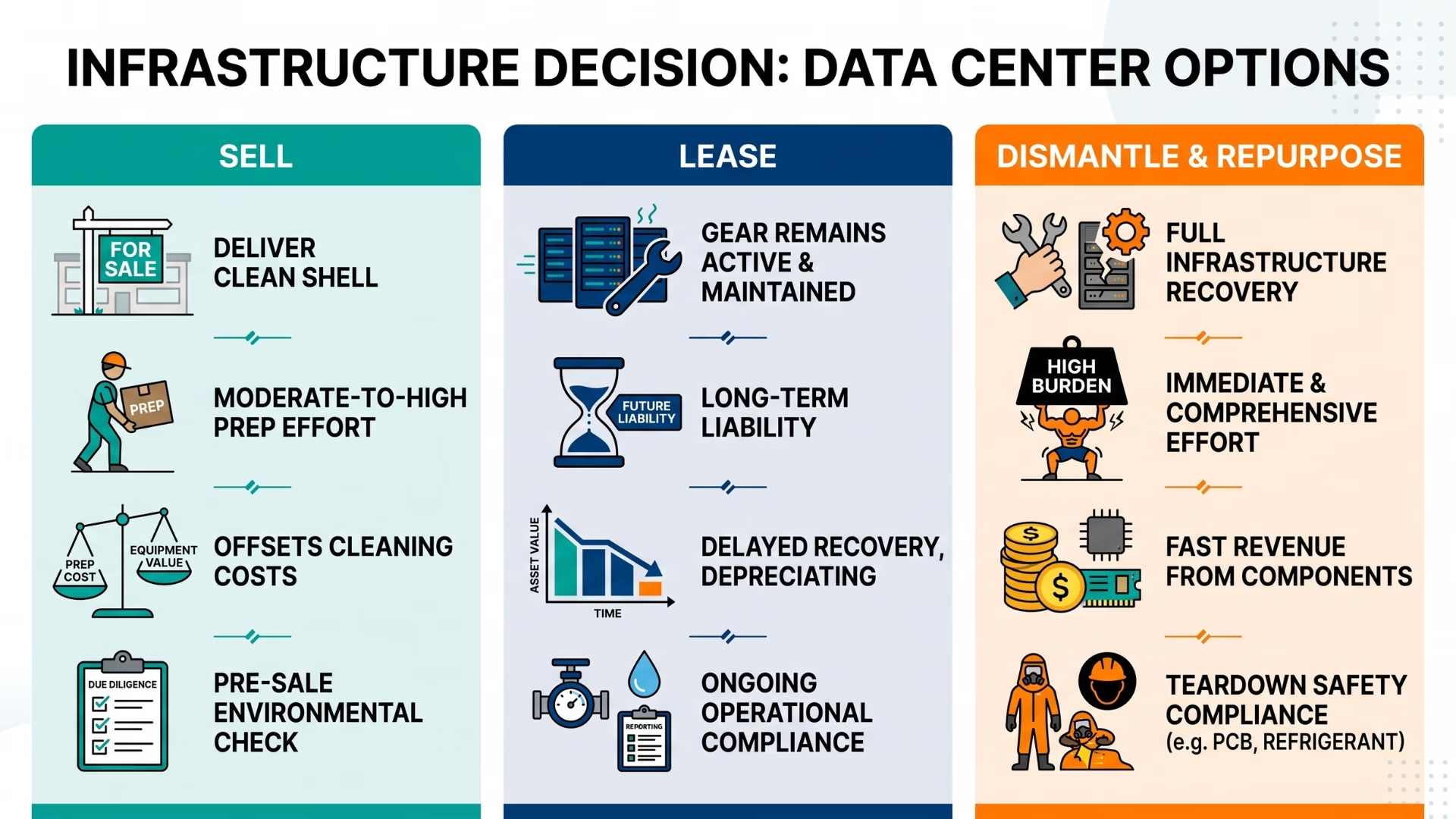
Sell vs. Lease vs. Dismantle: An Infrastructure Decision Matrix
When clients ask us to “Build a decision matrix comparing selling vs. leasing vs. decommissioning our data center”, we shift the focus away from real estate speculation and toward physical infrastructure reality:
| Factor |
Sell |
Lease |
Dismantle & Repurpose |
| Infrastructure Fate |
The buyer likely requires you to remove legacy gear to deliver a clean shell. |
Gear remains active; it requires ongoing maintenance and upgrades. |
Full teardown and recovery of all critical infrastructure. |
| Decommissioning Burden |
Moderate to High (if the buyer demands shell delivery prior to close). |
Delayed, but the owner often retains long-term liability for end-of-life gear. |
Immediate and comprehensive. |
| Equipment Value Recovery |
Used to offset the cost of clearing the space for the buyer. |
None immediately; gear depreciates further during the lease. |
Immediate monetization of used switchgear, generators, and chillers. |
| Regulatory Exposure |
Handled during pre-sale environmental diligence. |
Ongoing (refrigerant compliance, water usage, reporting). |
PCB, refrigerant, and OSHA de-energizing compliance during the teardown. |
When Does It Make Sense to Dismantle and Repurpose Instead?
Dismantle and repurpose when the facility realistically can’t support where demand is heading (density, cooling, sustainability reporting), or when the location simply isn’t competitive for data centers anymore, and your bigger goal is to recover the space for office, industrial, lab, or warehouse use. Decommissioning is also the right move when you need to exit a lease cleanly. The mistake is treating this as demolition into a landfill. Done right, it’s asset recovery.
Here’s why dismantling pays better in 2026 than it did five years ago. Grid equipment is genuinely constrained. Transmission and distribution component lead times averaged 38 weeks in 2023, nearly double the previous year, with costs escalating by almost 30% (DOE, 2024b). Said plainly: when new gear is slow and expensive, professionally removed used gear becomes valuable, as long as it’s documented, handled safely, and resold into legitimate channels. Your generators, switchgear, UPS systems, chillers, transformers, and racks are a recoverable portfolio, not scrap.
But dismantling is where owners get themselves in regulatory trouble, so cover these three compliance areas early:
- Electrical Equipment (PCBs): Transformers and certain legacy electrical equipment may be subject to PCB rules, and the EPA’s PCB program continually updates its compliance requirements.
- Cooling Equipment (Refrigerants): The EPA’s AIM Act restricts higher-GWP refrigerants in new equipment and certain new system installations. Existing systems generally are not subject to a 2027 replacement mandate, but owners should evaluate refrigerant inventories, future servicing costs, and replacement plans (EPA, 2024).
- Worker Safety (OSHA): Safety is non-negotiable. OSHA is explicit that proper de-energizing and grounding procedures must be followed before crews touch any electrical equipment.
This is exactly the work Quantum Technology’s data center decommissioning practice is built around. Our model is the physical side: disconnect, rig, remove, recover, resell, and then reset the space so the real estate can move on. On recent projects, the recovered value from switchgear and cooling plant materially offset the cost of the teardown, which is the whole point. If you plan the removal as an asset-recovery program rather than a cleanup, the economics change.
What’s the Biggest Mistake Companies Make When Shutting Down a Data Center?
The biggest mistake is deciding to demolish before valuing the physical equipment separately. Owners default to “it’s old, tear it down” and quietly torch a portfolio of hard-to-source electrical gear. The second most common mistake is starting the regulated-materials scan late, which turns PCB documentation, refrigerant compliance, and OSHA de-energizing planning into schedule killers rather than line items.
Taken together, these issues answer the question, “What’s the biggest mistake companies make when shutting down a data center?” It is committing to a physical demolition before completing a technical and regulatory valuation. Once equipment is damaged, the lost value may be impossible to recover.
What Would Someone Pay for My Data Center?
Value in 2026 is driven primarily by deliverable power, connectivity, and how close the site sits to current density and cooling expectations. While brokers will evaluate the real estate, owners must evaluate the physical equipment separately. Because of ongoing supply chain constraints, your generators, UPS systems, chillers, and switchgear represent a highly recoverable portfolio.
Instead of merely calculating a real estate multiple, calculate the equipment’s recoverable value. A professional decommissioning partner will evaluate this infrastructure not as scrap but as valuable assets that can meaningfully offset the costs of compliance, teardowns, and the delivery of a clean shell to the next buyer. Capturing every dollar of value hiding in the heavy gear is often the smartest financial move you can make regarding the physical plant.
The Exit Readiness Checklist: 10-Minute Triage
Work through these before you call a broker or a decommissioning partner. They point you toward selling, leasing, or dismantling rather than any spreadsheet.
- Document deliverable MW today versus theoretical. Pull utility service records, any curtailment history, and known upgrade constraints. This is your headline value in a market where new 50 MW interconnections take 4+ years (JLL, 2026).
- Assess density and cooling future-fit. Can the site support a next tenant’s density without a full mechanical rip-and-replace? Benchmark against Uptime’s reality: averages under 8 kW/rack, most sites not built for 30+ kW (Uptime Institute, 2024).
- Inventory connectivity. Map fiber providers and diversity so a buyer or tenant can do due diligence in days, not months.
- Run a regulated-materials scan early. Identify any transformers or oils that could trigger EPA PCB rules and gather documentation now.
- Evaluate your refrigerant strategy. While existing systems are exempt from a 2027 replacement mandate, the AIM Act’s restrictions on new equipment require you to evaluate future servicing costs and replacement plans (EPA, 2024).
- Check your sustainability reporting readiness. Fewer than half of operators track the metrics needed to assess sustainability (Uptime Institute, 2024).
- Model operating cost trajectory. Commercial electricity rose from 12.75¢/kWh in 2024 to 13.41¢/kWh in 2025, and to about 13.85¢/kWh in 2026 year-to-date (EIA, 2026). Rising power costs strengthen the case for exiting.
- Build the asset recovery inventory. List generators, switchgear, UPS, chillers, transformers, and racks as a recoverable portfolio, especially with T&D lead times near 38 weeks (DOE, 2024b).
Once you have gathered these 10 data points, the final step is essential: “Build a decision matrix comparing selling vs. leasing vs. decommissioning our data center”. Instead of relying on general real estate assumptions, populate this matrix with your actual physical infrastructure liabilities, equipment recovery inventory, and compliance risks. Comparing these outcomes based on regulatory exposure and the true burden of decommissioning will point you directly to the smartest exit path.
Where Quantum Technology Fits
If the answer is to dismantle, or if leasing and selling both fall through and you need the space back, the work is physical and specialized. Quantum Technology handles end-to-end infrastructure decommissioning and equipment resale: disconnect, rig, remove, and recover the electrical and mechanical plant for resale through legitimate channels, manage the compliant handling of regulated materials, and reset the space so the real estate can move on. We’re not here to sell you a data-wiping package. We’re here to make sure that when the building’s next chapter starts, you’ve captured every dollar of value hiding in the switchgear and the chillers. Tell us what you’ve got, and we’ll tell you what it’s worth.
Frequently Asked Questions
1. Should I sell my data center, lease it, or dismantle it to reuse the space?
Sell if a buyer wants a clean shell and you are prepared to decommission and remove the legacy infrastructure prior to closing. Lease if the site is workable and you are comfortable retaining the long-term liability, regulatory compliance, and maintenance of the aging building systems. Dismantle and repurpose if the facility requires a full teardown, allowing you to exit cleanly and maximize the recovery value of your electrical and mechanical equipment while supply chains remain tight.
2. Build a decision matrix comparing selling vs. leasing vs. decommissioning our data center.
A decision matrix should evaluate the physical realities of the exit, specifically: the fate of infrastructure, the decommissioning burden, the recovery of equipment value, and regulatory exposure. For example, selling often requires clearing the shell, leasing delays but retains the liability of aging gear, and decommissioning forces an immediate teardown but allows you to monetize used switchgear and chillers. Weighing these physical and regulatory obligations helps determine the most practical shutdown option.
3. Is it better to find a tenant to lease my data center or someone to buy it?
From an infrastructure perspective, this comes down to how much physical liability you want to retain. Leasing keeps the equipment active, meaning you may remain responsible for capital repairs and regulatory compliance (like managing future servicing costs and replacement plans under EPA AIM Act refrigerant restrictions). Selling generally limits your physical liability, provided you successfully manage the decommissioning and removal of legacy equipment that the new buyer doesn’t want.
4. What would someone pay for my data center?
While real estate brokers will value your land and power interconnection, the physical equipment inside your facility has a distinct, secondary market value. Because of ongoing supply chain constraints, your generators, UPS systems, chillers, and switchgear represent a recoverable portfolio. A professional decommissioning partner will evaluate this infrastructure not as scrap, but as valuable assets that can offset the costs of clearing the building for its next lifecycle.
5. What’s the biggest mistake companies make when shutting down a data center?
The biggest mistake is deciding to demolish before separately valuing the physical equipment. By defaulting to a standard demolition, companies quietly destroy a portfolio of hard-to-source electrical gear. The second most common mistake is starting the regulated-materials scan too late, letting PCB documentation, refrigerant inventory and replacement planning, and OSHA de-energizing requirements blow up the timeline.
.
6. How do I decide between selling, leasing, or dismantling my data center?
Start by assessing the condition of your mechanical and electrical infrastructure and deciding how much physical risk you want to retain. If you want to eliminate physical liability entirely, selling (often after delivering a clean shell) is the most definitive path. If you aren’t ready to part with the real estate but are willing to accept the ongoing equipment compliance and maintenance obligations, leasing works. If the facility is outdated, dismantling the space provides a clear break and capitalizes on the high secondary-market value of your used infrastructure.
Works Cited
- CBRE. North America Data Center Trends H2 2025. CBRE, 2026, www.cbre.com/insights/books/north-america-data-center-trends-h2-2025.
- DataCenterDynamics. I Squared Capital Buys 10 Data Centers from Cogent, Aims to Launch New US-Based Operator. DataCenterDynamics, 2026, www.datacenterdynamics.com/en/news/i-squared-capital-buys-10-data-centers-from-cogent-aims-to-launch-new-us-based-operator/.
- DOE. DOE Releases New Report Evaluating Increase in Electricity Demand from Data Centers. U.S. Department of Energy, 2024a, www.energy.gov/articles/doe-releases-new-report-evaluating-increase-electricity-demand-data-centers.
- DOE. 2021–2024 Four Year Review of Supply Chains for the Energy Sector Industrial Base. U.S. Department of Energy, 2024b, www.energy.gov/sites/default/files/2024-12/20212024-Four%20Year%20Review%20of%20Supply%20Chains%20for%20the%20Energy%20Sector%20Industrial%20Base.pdf.
- EIA. Electric Power Monthly. U.S. Energy Information Administration, 2026, www.eia.gov/electricity/monthly/epm_table_grapher.php?t=table_5_03.
- EPA. PCBs. U.S. Environmental Protection Agency, www.epa.gov/pcbs.
- EPA. AIM Act Technology Transitions Rule Fact Sheet. U.S. Environmental Protection Agency, 2024, www.epa.gov/system/files/documents/2024-12/final_rule_fact_sheet_updated.pdf.
- EPA. Water Reuse Case Study: Quincy, Washington. U.S. Environmental Protection Agency, www.epa.gov/waterreuse/water-reuse-case-study-quincy-washington.
- JLL. Global Data Center Outlook. JLL, 2026, www.jll.com/content/dam/jllcom/en/global/documents/reports/research-reports/26-research-global-data-center-outlook-new.pdf.
- OSHA. Deenergizing Lines and Equipment: Employee Protection. Occupational Safety and Health Administration, www.osha.gov/etools/electric-power/hazardous-energy-control/deenergizing-lines-equipment-employee-protection.
- Uptime Institute. Global Data Center Survey Results 2024. Uptime Institute, 2024, uptimeinstitute.com/uptime_assets/7425ec68d479c5d78a743df94a79b114ed9f9c73f13b6460949d2b8e73373209-GA-2024-07-uptime-institute-global-data-center-survey-results-2024.pdf.

by Dan Shinefield | Sep 3, 2026 | Blog, Data Center Decommissioning
The Sprint Norcross data center teardown was one of Quantum Technology’s largest and most complex decommissioning projects. We handled the full disassembly and removal of a decommissioned data center at 5295 Brook Hollow Parkway in Norcross, Georgia, removing generators, chillers, UPS systems, 240,000 lbs of lead-acid batteries, raised floors, and full electrical infrastructure, and restoring the space in just four weeks. If you have a facility to clear and assets worth recovering, this case study shows what large-scale data center removal actually looks like on the ground, from de-energization through final site restoration.
TL;DR: The Sprint Norcross Teardown at a Glance
- Quantum Technology completed the full Sprint Norcross data center decommissioning in 4 weeks, handling disassembly and removal of all data center equipment.
- The asset list included three Caterpillar 2 MW generators, four 400-ton chillers, eight Liebert UPS systems, twenty CRAC units, and 240,000 lbs of lead-acid batteries across four battery rooms.
- Our own electricians de-energized systems without disabling the building power, which meant rewiring the building’s fire alarm and troubleshooting the data center lighting.
- Site restoration included reconstituting the raised floor after removing air handlers left twelve holes of 30 square feet each, plus patching walls, repainting, and replacing roughly 700 delaminating floor tiles.
Why Was the Sprint Norcross Data Center Decommissioned?
The Sprint Norcross data center was decommissioned because a private investor and owner needed to convert a dormant, fully equipped facility back into a marketable property. After Sprint vacated, the building was marketed as a fully equipped data center, including a brief lease to a bit mining company that could not make its lease payments. With the asset sitting idle, the owner contracted Quantum Technology to decommission the equipment, purchase it, raise cash, give the property a cosmetic boost, and re-market it as a corporate campus.
That storyline is more common than it looks. TechTarget notes that companies decommission for reasons including consolidation, expanding cloud presence, and upgrading aging infrastructure. When a tenant leaves or a portfolio shifts, the building still contains millions of dollars’ worth of mechanical and electrical equipment. Somebody has to remove it safely, capture its value, and hand back clean space.
This is also why decommission-plus-restore work continues to grow. A municipal planning white paper from Wichita and Sedgwick County defines a proper decommissioning plan as including site restoration, proper handling of outdated hardware and materials such as batteries, coolants, and other hazardous substances, and a removal timeline.
What Exactly Was Removed at Sprint Norcross?
Quantum Technology removed the complete mechanical and electrical backbone of the facility, not just a rack of servers. This is the difference between a full facility teardown and simply pulling IT gear. The published asset list from the Sprint Norcross data center included the following:
- Three Caterpillar 2 MW generators with paralleling gear
- Two 10,000-gallon diesel fuel tanks holding 6,000 gallons of diesel fuel
- Four outdoor 400-ton chillers
- Eight Liebert UPS systems
- Twenty chilled water CRAC units
- Twelve RPPs, twelve PDUs, and twelve air handlers with VFD controllers
- Four battery rooms containing 240,000 lbs of lead-acid batteries, plus ferrous and non-ferrous scrap
In addition to the major MEP equipment, we removed walls, racking, and piping. This scope reflects what a real data center demolition looks like when the goal is a clean, remarketable building rather than a stripped shell.
Can You De-Energize and Dismantle Systems Without Taking Down the Whole Building?
Quantum Technology used its own electricians to de-energize the data center systems without disabling building power. That distinction is critical for any site that still needs lights, life safety, and base building services running while the data hall comes apart.
Keeping the building live while killing the data center load is not something you flip a switch for. This project required rewiring the building’s fire alarm and troubleshooting lighting problems in the data center. Controlling hazardous energy is a safety baseline, not an afterthought. OSHA’s lockout/tagout standard, 29 CFR 1910.147, sets out specific procedures for controlling hazardous energy during servicing and maintenance, and electrical isolation is where a decommissioning project either stays safe or goes wrong.
What Does “Restore to Handback Condition” Actually Mean?
Restoration means the space is left clean, safe, and ready for the next tenant, not just emptied. At Sprint Norcross, restoration was a defined part of the scope, and the details show what landlord handback really involves.
Removing the twelve air handlers left twelve 30-square-foot holes in the raised floor system. Quantum Technology reconstituted the floor by adding floor structure and filling in with raised floor panels, so the finished surface was continuous and load-bearing again.
That last point is the tell of a professionally managed job. A crew focused only on hauling out copper does not stop to fix trip hazards. Restoration is where a decommissioning project walkthrough separates a true partner from a scrapper.
Can the Vendor Buy the Assets and Offset the Teardown Cost?
Yes. On the Sprint Norcross project, Quantum Technology decommissioned and purchased the assets so the owner could raise cash from equipment that was otherwise sitting idle. That is our core model.
Generators, switchgear, UPS systems, chillers, and raised floors all carry resale or recovery value. When a vendor can recover that value, the teardown stops being a pure cost line and starts working in your favor. For property owners and REIT teams clearing a data center asset for repurposing, that changes the math on the whole project.
How Does a Data Center Teardown Compare to Other Approaches?
Not every vendor does the same job. Here is how an asset-recovery-plus-dismantle model compares to a demolition-only general contractor.
| Dimension |
Asset Recovery + Dismantle |
Demolition-Only General Contractor |
| Primary focus |
MEP infrastructure removal, rigging, resale, recycling, restoration |
Tear-out and haul-off |
| Value recovery |
Buys and resells generators, UPS systems, chillers, and switchgear |
Typically none |
| Electrical de-energization |
In-house electricians keep the building’s power live |
Usually subcontracted |
| Site restoration |
Raised floor, wall patch and paint, tile replacement |
Varies by contractor |
| Environmental handling |
Zero-landfill policy: ferrous and non-ferrous recycling |
Varies by contractor |
| Best fit |
Full facility teardown with asset value to recover |
Structural demolition |
Data Center Knowledge notes that decommissioning involves removing IT assets and does not typically mean shutting down an entire data center, though it can be part of that process. TechTarget frames decommissioning as a cross-team effort spanning planning, inventory, compliance, and documentation, a broader approach than a demolition-only approach.
A Step-By-Step Guide to Dismantling a Data Center
Here is a checklist that applies to any large-scale data center removal, built on the industry framework and mapped to how the Sprint Norcross teardown actually ran. Decomm Systems publishes a seven-phase decommissioning checklist spanning planning through final review, and these steps expand it into field practice.
- Scope and plan. Define the asset list, roles, timeline, permits, and insurance before anyone touches a bolt. TechTarget notes that cross-functional teams typically include IT administrators, facilities personnel, security personnel, and project management personnel.
- Inventory and document everything. Build a full asset inventory and a disposition plan that flags items to be resold, redeployed, or recycled.
- Isolate power safely. De-energize the data center systems in accordance with lockout/tagout discipline. At Norcross, this was done without disabling building power, which meant rewiring the fire alarm and fixing the lighting first.
- Drain and secure fluids and hazardous streams. Recover refrigerant from chillers and CRAC units, drain diesel from fuel tanks, and stabilize battery rooms before any equipment moves.
- Remove major equipment. Rig and remove generators, UPS systems, chillers, air handlers, PDUs, and RPPs. At Norcross, this meant three 2 MW generators and four 400-ton chillers, among others.
- Recover assets and generate records. Redeploy, resell, or recycle each asset and produce the disposition documentation that the ESG and legal teams need.
- Strip structure. Remove racking, walls, and piping, and lift raised floor sections where required.
- Restore the space. Reconstitute the raised floor, patch penetrations, replace damaged tiles, and repaint, exactly as was done on the Sprint Norcross data center.
- Close out. Complete a final walkthrough, archive the documentation, and hand back a clean, marketable building.
What Heavy Equipment Is Needed for a Data Center Teardown?
A data center teardown requires rigging and material-handling equipment sized for the loads being moved, plus trained crews to operate it. At Sprint Norcross, the loads were substantial: three Caterpillar 2 MW generators, four 400-ton outdoor chillers, and 240,000 lbs of lead-acid batteries across four battery rooms. Moving that safely requires rigging gear, forklifts, and pallet-handling equipment for battery strings, cranes or hoists for rooftop chillers, and cutting and demolition tools for walls, racking, and piping. Just as important, it takes licensed electricians to de-energize the systems before any of it comes out.
How Are the Hazardous Streams Handled, and What Records Are Produced?
Regulated components are handled under specific federal rules, and each one generates a paper trail. The Sprint Norcross site carried three high-liability streams: refrigerant in the chillers and CRAC units, 240,000 lbs of lead-acid batteries, and diesel fuel.
For refrigerant, EPA Section 608 restricts the resale of used refrigerant to a new owner unless it has been reclaimed by an EPA-certified reclaimer. The distinction between recover, recycle, and reclaim is precise and matters in your documentation, as the EPA lays out in its definitions of refrigerant handling. Section 608 also carries recordkeeping and reporting requirements for stationary refrigeration activity.
For batteries, EPA’s universal waste rules require that any battery showing leakage, spillage, or damage be contained. EPA also notes that state universal waste programs may add requirements beyond the federal baseline, which matters for multi-state portfolios. Our battery removal services exist to handle exactly the kind of volume Norcross presented.
Legacy data centers can also carry clean-agent fire suppression. EPA phased out production and import of virgin halons in the United States on January 1, 1994, driven by the Montreal Protocol. If a site has Halon or FM-200, our Halon and FM-200 recovery service covers it.
Why Zero-Landfill Recycling Matters for Your Project
The scale of the problem is why zero-landfill recycling matters. The world generated 62 billion kg of e-waste in 2022, and only 22.3% was documented as formally collected and recycled. The World Health Organization cites the same 22.3% figure and frames e-waste as a public health issue.
FAQ
1. Where can we find reviews and case studies for data center decommissioning companies in the US?
Look for vendors that publish specific, verifiable projects rather than vague claims. The Sprint Norcross data center case study documents the exact asset list, the four-week duration, the private client type, and the restoration work performed. A real case study names the equipment, the site, and what was left behind, which is the standard to which any decommissioning partner should be held.
2. What does a typical timeline look like for a large data center teardown?
Duration scales with equipment volume, hazardous streams, and restoration scope, not just square footage. Quantum Technology completed the full Sprint Norcross teardown in 4 weeks, including three 2 MW generators, four 400-ton chillers, eight UPS systems, and full site restoration. Some projects also run a phased “pilot light” period; TechTarget notes this can last 30 to 60 days in some cases before final shutdown.
3. What reporting should we expect from the site supervisor during a teardown?
Expect asset inventory tracking, disposition records for what is resold, recycled, or reclaimed, and compliance documentation for regulated streams. For refrigerant specifically, EPA Section 608 carries recordkeeping and reporting requirements that should be reflected in the handover pack. A disposition process that generates certificates, as outlined in the Decomm Systems checklist, is what ESG and legal teams will want on file.
4. What is included in data center decommissioning versus just removing IT gear?
Full decommissioning covers the mechanical and electrical infrastructure, structural elements, and site restoration, not only the servers. The Quantum Technology data center decommissioning service covers disconnection, removal, rigging, demolition, recycling, and restoration. At Sprint Norcross, that meant generators, chillers, UPS systems, batteries, walls, racking, piping, and a reconstituted raised floor, all in one managed scope.
Works Cited

by Brian Dordevic | Jan 13, 2026 | Blog, Data Center Decommissioning
When data center disasters show up in movies, they all look the same.
Everything feels controlled, almost sterile. Then someone notices a warning on a screen. A moment later, smoke crept along the ceiling. Alarms go off. People start running. The servers are overheating, the facility is failing, and chaos takes over.
It makes for a great scene.
Real failures are often less cinematic and more gradual. There is no dramatic moment when everyone realizes something is wrong. Instead, problems develop quietly, which makes them even more dangerous.
Temperatures rise slowly. Cooling units run longer than usual. A warning appears, then clears. Everything seems fine, so everyone moves on.
Until the alarms finally sound, the problem has already been building for days or weeks.
The Problem Usually Starts Long Before the Outage
When a data center experiences downtime, the investigation almost always starts in the same place: Servers, power, and network equipment.
Cooling is often treated as a secondary system, something that either works or doesn’t. If the cooling is running, it is assumed to be fine.
In practice, many cooling failures do not happen suddenly; they start during maintenance.
An upgrade, a routine repair, component replacement, or scheduled service window can be eventful. Once the system is back online and dashboards turn green, it’s easy to assume that everything went smoothly.
Even a small issue during refrigerant handling might have occurred, one that remains hidden until the right conditions reveal the problem.
Why Refrigerant Handling Matters in Data Centers
Every time a cooling system is serviced, repaired, upgraded, or decommissioned, refrigerant must be removed from the system. This step is unavoidable.
A
refrigerant recovery machine enables the safe extraction of refrigerant, stores it in certified recovery cylinders, and prevents its release into the environment or contamination of the system.
When the process is handled correctly, the cooling system can be returned to service as designed. If rushed or done improperly, long-term risks are introduced.
What Goes Wrong Without Proper Refrigerant Recovery
Improper refrigerant handling does not always cause immediate failure. That is what makes it dangerous.
Common issues include:
- Loss of refrigerant during maintenance.
- Moisture is entering closed refrigerant loops.
- Air trapped inside system lines.
- Incorrect refrigerant charge during restart.
Each of these issues places stress on compressors and reduces cooling efficiency. The system may appear to function normally at first, especially under light loads.
As demand increases, the margin disappears.
The False Confidence of a “Clean” Restart
After maintenance, cooling systems often restart without any apparent issues: dashboards return to green, temperatures stabilize, and teams move on.
All of this creates a false sense of confidence.
Cooling systems typically fail under load, not during idle conditions. A traffic spike, a backup, a software deployment, or a seasonal temperature increase can push a compromised system beyond its limits.
When that happens, thermal alarms escalate to that point fast enough that the opportunity for prevention has passed.
Why the Server Room Is Rarely the Real Starting Point
When servers overheat, everything downstream feels like an IT problem. Systems throttle back. Applications slow down or drop. Virtual machines scramble to move. Customers notice almost immediately.
From the outside, it appears to be a server failure. Inside the facility, the story is often very different.
In many cases, the real issue stems from the cooling work done days or even weeks earlier. A small mistake during maintenance. Refrigerant handling seemed routine at the time. Nothing dramatic enough to raise concerns right away.
Cooling failures tend to be delayed failures. This means it is not immediately apparent, and that delay makes them harder to diagnose, harder to explain, and far more expensive to fix once they surface.
By the time the servers react, the real damage has already been done.
Refrigerant Recovery Machines as a Reliability Tool
In data center operations, reliability depends on consistency.
Processes must be repeatable, verifiable, and documented. Refrigerant recovery machines support these processes by standardizing how refrigerant is removed and stored during maintenance, ensuring:
- Clean refrigerant extraction without contamination.
- Accurate refrigerant preservation for recharging.
- Stable system pressure during restart.
- Faster and more predictable recovery times.
Data center reliability is defined by execution.
Every maintenance task is an opportunity to protect system stability or introduce risk. Refrigerant recovery is often treated as a background step, but it directly affects cooling performance,
equipment lifespan, and resilience. Ignoring it does not remove the risk. It simply delays the appearance of the consequences.
Why This Matters More in Modern Data Centers
Modern data centers operate with higher rack densities and tighter thermal thresholds. There is less tolerance for inefficiency.
As cooling architectures become more complex, even small refrigerant-related issues can have amplified effects. What was manageable in older facilities becomes unacceptable in high-density environments.
This makes refrigerant recovery machines a critical part of modern data center infrastructure management.
Downtime Prevention Starts Before the Alarms
In movies, data center failures are dramatic and immediate. In reality, they are quiet and gradual.
The most damaging outages often begin long before anyone notices a problem.
They begin during routine maintenance. During system restarts. During refrigerant handling, which is often overlooked.
Downtime prevention does not start in the server room.
It starts in the cooling system.
At Quantum Technology, cooling infrastructure is treated as mission-critical, not background equipment.
Our data center services focus on:
- Reliable cooling system maintenance and modernization.
- Proper refrigerant recovery and handling practices.
- Risk reduction during upgrades and decommissioning.
- Protecting uptime through disciplined infrastructure processes.
Whether you are maintaining existing systems, upgrading cooling infrastructure, or planning a data center decommissioning, the details matter.
Quiet failures are still failures.