
TL;DR: Key Takeaways Before You Pick an Exit Path
- Power Over Real Estate: With interconnection queues taking 4+ years (JLL, 2026), deliverable utility capacity is often worth far more than the physical building.
- Selling Means Clearing Shells: Platform buyers usually want the megawatts, not legacy IT or mechanical gear. Sellers are frequently required to decommission and remove legacy infrastructure to deliver a “clean shell” prior to closing.
- Leasing Retains Long-Tail Liabilities: Leasing generates recurring revenue but leaves the owner holding long-term compliance liabilities for aging cooling systems, water rules, and refrigerant phase-outs (EPA, 2024).
- Dismantling Yields High Equipment Value: Grid equipment lead times average 38 weeks (DOE, 2024b), making professionally recovered switchgear, generators, transformers, and chillers high-value assets rather than scrap.
Understanding Data Center Exit Strategies: Real Estate vs. Infrastructure Value
A data center exit strategy is a plan for retiring an end-of-life facility, including whether to sell the building, lease it to another operator, or dismantle the infrastructure and repurpose the space. While real estate brokers and market dynamics will ultimately drive your exit strategy, every path forces a decision about the physical infrastructure itself.
For most owners, the practical question is less about the real estate and more about the liabilities left inside when asking, “Should I sell my data center, lease it, or dismantle it to reuse the space?” The answer starts with understanding the decommissioning obligations, regulatory risks, and the recoverable value of equipment associated with selling, leasing, or dismantling the space.
In a market where primary U.S. wholesale data center vacancy reached a record low of 1.4% at the end of 2025, even an aging facility may be worth serious money. The building itself may not be the most valuable part of the deal. An energized site with documented utility capacity can be more attractive than a newer shell waiting years for an interconnection. That is why asking “What would someone pay for my data center?” requires more than a traditional real estate appraisal. The valuation must consider the power position, connectivity, modernization needs, potential lease income, and recoverable equipment.
Owners should also compare the three paths side by side rather than committing to the first option that appears workable. A useful starting point is to build a decision matrix comparing the options of selling, leasing, or decommissioning our data center. The matrix should evaluate speed to cash, retained risk, required capital, regulatory exposure, market demand, equipment recovery, and the long-term value of the underlying property.
Here is the thing nobody tells you when you are staring down an aging facility: the building might be the least valuable part of the deal.
What’s the Fastest Way to Figure Out Whether to Sell, Lease, or Dismantle My Data Center?
Start with power. U.S. data centers consumed roughly 176 TWh in 2023 (about 4.4% of national electricity consumption) and could reach 325-580 TWh by 2028 (DOE, 2024a). Because energy scrutiny is only going up, you must document the megawatts that are actually deliverable today, not the capacity that might become available after future utility work. Pull service records, curtailment history, substation information, and any known upgrade constraints. In many markets, proven utility service is the headline asset because a new large interconnection can take years (JLL, 2026).
Next, assess the building’s operational fit. Can the electrical and cooling systems support current tenant requirements? Can the floor layout, rack density, redundancy, and heat rejection be upgraded without a full rebuild? A site that is functionally dated but structurally adaptable may still sell or lease well. A site that cannot support future density, cooling, or sustainability requirements may be a better candidate for dismantling.
Most owners fixate on the real estate and the racks while overlooking the interconnection. In the current market, power deliverability may be the single most valuable asset on the property. An older facility with proven utility service can outperform a newer building stuck in interconnection limbo.
Should I Sell My Data Center?
In a constrained market, buyers often acquire older data centers primarily for their power interconnections and permits, not for the legacy infrastructure inside them. While selling transfers the operational headache of the real estate, it rarely absolves you of your physical infrastructure responsibilities right away.
Investor appetite is not theoretical. With over $300 billion in global data center M&A since 2020, platform buyers are actively hunting for sites they can fold into larger portfolios (JLL, 2026). Scarcity is pushing more preleasing and off-market activity, which CBRE flags as a signal that buyers move fast when something workable appears (CBRE, 2026). A real recent example: in 2026, Cogent sold 10 data centers to I Squared Capital as seed assets for a brand-new operator focused on colocation and high-density AI inference (DataCenterDynamics, 2026). Legacy sites became the foundation of a new platform.
Because most legacy facilities can’t support the 30+ kW rack densities required for modern deployments, buyers view aging MEP (mechanical, electrical, and plumbing) and IT gear as a liability. Often, a condition of the sale is the delivery of a “clean shell”.
This means the seller must still undertake a complete decommissioning project: disconnecting, removing, and recovering value from the older switchgear, generators, and UPS systems before the transaction can close.
That said, this isn’t a magic ticket. Buyers will factor in your modernization gap. The Global Data Center Survey Results 2024 found that average rack densities are rising but still mostly sit below 8 kW, and most facilities can’t support the 30+ kW racks demanded by AI (Uptime Institute, 2024). Because your legacy cooling and electrical design likely can’t meet that requirement, buyers will require you to remove it. Transaction timelines can stretch significantly when environmental due diligence, regulated materials (such as PCBs or refrigerants), and the safe removal of equipment become complicated. Your primary responsibility during a sale is to ensure that the physical decommissioning is handled cleanly, safely, and in compliance with regulations.
Is It Better to Lease My Data Center or Sell It?
If you choose to lease the facility to another operator, you preserve the underlying real estate but retain the long-tail risks of the physical infrastructure. A tenant may operate the IT floor, but the owner often remains exposed to the capital repairs and regulatory compliance of the aging building systems.
The central question often comes down to: “Is it better to find a tenant to lease my data center or someone to buy it?” Leasing lets you monetize the asset while retaining ownership, and pricing trends show that tenants will pay a premium for delivered capacity when supply is scarce (CBRE, 2026). But leasing leaves you holding the long tail.
When you keep the infrastructure active, you are on the hook for upcoming regulatory considerations, such as managing future servicing costs and replacement plans under EPA AIM Act refrigerant restrictions, sustainability reporting, and local water-use rules (EPA, 2024). You must write clear, explicit boundaries for operations, maintenance, and end-of-life decommissioning into the lease so it is absolutely clear who pays to remove and upgrade the heavy gear when the equipment inevitably ages out.
Sell vs. Lease vs. Dismantle: An Infrastructure Decision Matrix
When clients ask us to “Build a decision matrix comparing selling vs. leasing vs. decommissioning our data center”, we shift the focus away from real estate speculation and toward physical infrastructure reality:
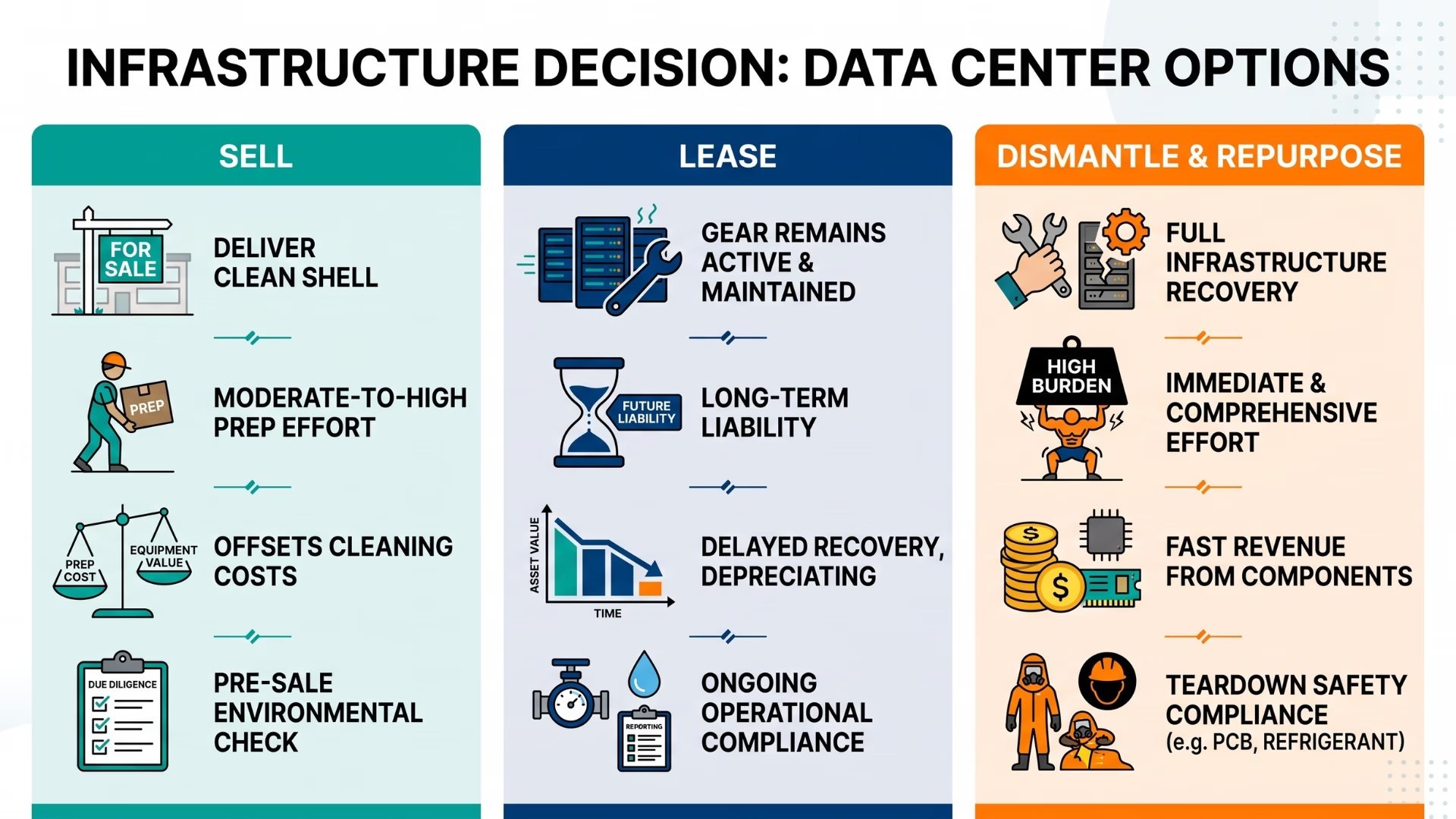
| Factor | Sell | Lease | Dismantle & Repurpose |
|---|---|---|---|
| Infrastructure Fate | The buyer likely requires you to remove legacy gear to deliver a clean shell. | Gear remains active; it requires ongoing maintenance and upgrades. | Full teardown and recovery of all critical infrastructure. |
| Decommissioning Burden | Moderate to High (if the buyer demands shell delivery prior to close). | Delayed, but the owner often retains long-term liability for end-of-life gear. | Immediate and comprehensive. |
| Equipment Value Recovery | Used to offset the cost of clearing the space for the buyer. | None immediately; gear depreciates further during the lease. | Immediate monetization of used switchgear, generators, and chillers. |
| Regulatory Exposure | Handled during pre-sale environmental diligence. | Ongoing (refrigerant compliance, water usage, reporting). | PCB, refrigerant, and OSHA de-energizing compliance during the teardown. |
When Does It Make Sense to Dismantle and Repurpose Instead?
Dismantle and repurpose when the facility realistically can’t support where demand is heading (density, cooling, sustainability reporting), or when the location simply isn’t competitive for data centers anymore, and your bigger goal is to recover the space for office, industrial, lab, or warehouse use. Decommissioning is also the right move when you need to exit a lease cleanly. The mistake is treating this as demolition into a landfill. Done right, it’s asset recovery.
Here’s why dismantling pays better in 2026 than it did five years ago. Grid equipment is genuinely constrained. Transmission and distribution component lead times averaged 38 weeks in 2023, nearly double the previous year, with costs escalating by almost 30% (DOE, 2024b). Said plainly: when new gear is slow and expensive, professionally removed used gear becomes valuable, as long as it’s documented, handled safely, and resold into legitimate channels. Your generators, switchgear, UPS systems, chillers, transformers, and racks are a recoverable portfolio, not scrap.
But dismantling is where owners get themselves in regulatory trouble, so cover these three compliance areas early:
- Electrical Equipment (PCBs): Transformers and certain legacy electrical equipment may be subject to PCB rules, and the EPA’s PCB program continually updates its compliance requirements.
- Cooling Equipment (Refrigerants): The EPA’s AIM Act restricts higher-GWP refrigerants in new equipment and certain new system installations. Existing systems generally are not subject to a 2027 replacement mandate, but owners should evaluate refrigerant inventories, future servicing costs, and replacement plans (EPA, 2024).
- Worker Safety (OSHA): Safety is non-negotiable. OSHA is explicit that proper de-energizing and grounding procedures must be followed before crews touch any electrical equipment.
This is exactly the work Quantum Technology’s data center decommissioning practice is built around. Our model is the physical side: disconnect, rig, remove, recover, resell, and then reset the space so the real estate can move on. On recent projects, the recovered value from switchgear and cooling plant materially offset the cost of the teardown, which is the whole point. If you plan the removal as an asset-recovery program rather than a cleanup, the economics change.
What’s the Biggest Mistake Companies Make When Shutting Down a Data Center?
The biggest mistake is deciding to demolish before valuing the physical equipment separately. Owners default to “it’s old, tear it down” and quietly torch a portfolio of hard-to-source electrical gear. The second most common mistake is starting the regulated-materials scan late, which turns PCB documentation, refrigerant compliance, and OSHA de-energizing planning into schedule killers rather than line items.
Taken together, these issues answer the question, “What’s the biggest mistake companies make when shutting down a data center?” It is committing to a physical demolition before completing a technical and regulatory valuation. Once equipment is damaged, the lost value may be impossible to recover.
What Would Someone Pay for My Data Center?
Value in 2026 is driven primarily by deliverable power, connectivity, and how close the site sits to current density and cooling expectations. While brokers will evaluate the real estate, owners must evaluate the physical equipment separately. Because of ongoing supply chain constraints, your generators, UPS systems, chillers, and switchgear represent a highly recoverable portfolio.
Instead of merely calculating a real estate multiple, calculate the equipment’s recoverable value. A professional decommissioning partner will evaluate this infrastructure not as scrap but as valuable assets that can meaningfully offset the costs of compliance, teardowns, and the delivery of a clean shell to the next buyer. Capturing every dollar of value hiding in the heavy gear is often the smartest financial move you can make regarding the physical plant.
The Exit Readiness Checklist: 10-Minute Triage
Work through these before you call a broker or a decommissioning partner. They point you toward selling, leasing, or dismantling rather than any spreadsheet.
- Document deliverable MW today versus theoretical. Pull utility service records, any curtailment history, and known upgrade constraints. This is your headline value in a market where new 50 MW interconnections take 4+ years (JLL, 2026).
- Assess density and cooling future-fit. Can the site support a next tenant’s density without a full mechanical rip-and-replace? Benchmark against Uptime’s reality: averages under 8 kW/rack, most sites not built for 30+ kW (Uptime Institute, 2024).
- Inventory connectivity. Map fiber providers and diversity so a buyer or tenant can do due diligence in days, not months.
- Run a regulated-materials scan early. Identify any transformers or oils that could trigger EPA PCB rules and gather documentation now.
- Evaluate your refrigerant strategy. While existing systems are exempt from a 2027 replacement mandate, the AIM Act’s restrictions on new equipment require you to evaluate future servicing costs and replacement plans (EPA, 2024).
- Check your sustainability reporting readiness. Fewer than half of operators track the metrics needed to assess sustainability (Uptime Institute, 2024).
- Model operating cost trajectory. Commercial electricity rose from 12.75¢/kWh in 2024 to 13.41¢/kWh in 2025, and to about 13.85¢/kWh in 2026 year-to-date (EIA, 2026). Rising power costs strengthen the case for exiting.
- Review water strategy. Water is increasingly a diligence item. The EPA’s Quincy, Washington reuse case study shows how treatment and reuse now show up in buyer and tenant reviews.
- Build the asset recovery inventory. List generators, switchgear, UPS, chillers, transformers, and racks as a recoverable portfolio, especially with T&D lead times near 38 weeks (DOE, 2024b).
- Plan de-energizing and worker safety. Line up OSHA-compliant de-energizing and grounding before any physical work begins.
Once you have gathered these 10 data points, the final step is essential: “Build a decision matrix comparing selling vs. leasing vs. decommissioning our data center”. Instead of relying on general real estate assumptions, populate this matrix with your actual physical infrastructure liabilities, equipment recovery inventory, and compliance risks. Comparing these outcomes based on regulatory exposure and the true burden of decommissioning will point you directly to the smartest exit path.
Where Quantum Technology Fits
If the answer is to dismantle, or if leasing and selling both fall through and you need the space back, the work is physical and specialized. Quantum Technology handles end-to-end infrastructure decommissioning and equipment resale: disconnect, rig, remove, and recover the electrical and mechanical plant for resale through legitimate channels, manage the compliant handling of regulated materials, and reset the space so the real estate can move on. We’re not here to sell you a data-wiping package. We’re here to make sure that when the building’s next chapter starts, you’ve captured every dollar of value hiding in the switchgear and the chillers. Tell us what you’ve got, and we’ll tell you what it’s worth.
Frequently Asked Questions
1. Should I sell my data center, lease it, or dismantle it to reuse the space?
Sell if a buyer wants a clean shell and you are prepared to decommission and remove the legacy infrastructure prior to closing. Lease if the site is workable and you are comfortable retaining the long-term liability, regulatory compliance, and maintenance of the aging building systems. Dismantle and repurpose if the facility requires a full teardown, allowing you to exit cleanly and maximize the recovery value of your electrical and mechanical equipment while supply chains remain tight.
2. Build a decision matrix comparing selling vs. leasing vs. decommissioning our data center.
A decision matrix should evaluate the physical realities of the exit, specifically: the fate of infrastructure, the decommissioning burden, the recovery of equipment value, and regulatory exposure. For example, selling often requires clearing the shell, leasing delays but retains the liability of aging gear, and decommissioning forces an immediate teardown but allows you to monetize used switchgear and chillers. Weighing these physical and regulatory obligations helps determine the most practical shutdown option.
3. Is it better to find a tenant to lease my data center or someone to buy it?
From an infrastructure perspective, this comes down to how much physical liability you want to retain. Leasing keeps the equipment active, meaning you may remain responsible for capital repairs and regulatory compliance (like managing future servicing costs and replacement plans under EPA AIM Act refrigerant restrictions). Selling generally limits your physical liability, provided you successfully manage the decommissioning and removal of legacy equipment that the new buyer doesn’t want.
4. What would someone pay for my data center?
While real estate brokers will value your land and power interconnection, the physical equipment inside your facility has a distinct, secondary market value. Because of ongoing supply chain constraints, your generators, UPS systems, chillers, and switchgear represent a recoverable portfolio. A professional decommissioning partner will evaluate this infrastructure not as scrap, but as valuable assets that can offset the costs of clearing the building for its next lifecycle.
5. What’s the biggest mistake companies make when shutting down a data center?
The biggest mistake is deciding to demolish before separately valuing the physical equipment. By defaulting to a standard demolition, companies quietly destroy a portfolio of hard-to-source electrical gear. The second most common mistake is starting the regulated-materials scan too late, letting PCB documentation, refrigerant inventory and replacement planning, and OSHA de-energizing requirements blow up the timeline.
.
6. How do I decide between selling, leasing, or dismantling my data center?
Start by assessing the condition of your mechanical and electrical infrastructure and deciding how much physical risk you want to retain. If you want to eliminate physical liability entirely, selling (often after delivering a clean shell) is the most definitive path. If you aren’t ready to part with the real estate but are willing to accept the ongoing equipment compliance and maintenance obligations, leasing works. If the facility is outdated, dismantling the space provides a clear break and capitalizes on the high secondary-market value of your used infrastructure.
Works Cited
- CBRE. North America Data Center Trends H2 2025. CBRE, 2026, www.cbre.com/insights/books/north-america-data-center-trends-h2-2025.
- DataCenterDynamics. I Squared Capital Buys 10 Data Centers from Cogent, Aims to Launch New US-Based Operator. DataCenterDynamics, 2026, www.datacenterdynamics.com/en/news/i-squared-capital-buys-10-data-centers-from-cogent-aims-to-launch-new-us-based-operator/.
- DOE. DOE Releases New Report Evaluating Increase in Electricity Demand from Data Centers. U.S. Department of Energy, 2024a, www.energy.gov/articles/doe-releases-new-report-evaluating-increase-electricity-demand-data-centers.
- DOE. 2021–2024 Four Year Review of Supply Chains for the Energy Sector Industrial Base. U.S. Department of Energy, 2024b, www.energy.gov/sites/default/files/2024-12/20212024-Four%20Year%20Review%20of%20Supply%20Chains%20for%20the%20Energy%20Sector%20Industrial%20Base.pdf.
- EIA. Electric Power Monthly. U.S. Energy Information Administration, 2026, www.eia.gov/electricity/monthly/epm_table_grapher.php?t=table_5_03.
- EPA. PCBs. U.S. Environmental Protection Agency, www.epa.gov/pcbs.
- EPA. AIM Act Technology Transitions Rule Fact Sheet. U.S. Environmental Protection Agency, 2024, www.epa.gov/system/files/documents/2024-12/final_rule_fact_sheet_updated.pdf.
- EPA. Water Reuse Case Study: Quincy, Washington. U.S. Environmental Protection Agency, www.epa.gov/waterreuse/water-reuse-case-study-quincy-washington.
- JLL. Global Data Center Outlook. JLL, 2026, www.jll.com/content/dam/jllcom/en/global/documents/reports/research-reports/26-research-global-data-center-outlook-new.pdf.
- OSHA. Deenergizing Lines and Equipment: Employee Protection. Occupational Safety and Health Administration, www.osha.gov/etools/electric-power/hazardous-energy-control/deenergizing-lines-equipment-employee-protection.
- Uptime Institute. Global Data Center Survey Results 2024. Uptime Institute, 2024, uptimeinstitute.com/uptime_assets/7425ec68d479c5d78a743df94a79b114ed9f9c73f13b6460949d2b8e73373209-GA-2024-07-uptime-institute-global-data-center-survey-results-2024.pdf.


